
Repair a Damaged PCB Stiffener
A pcb stiffener is an important component in the printed circuit board that provides rigidity to the flexible part. It also helps to protect the circuit from damage. The stiffener can be attached to the flex circuit using thermal bonding or pressure-sensitive adhesives. When attached properly, they can prevent the circuit from bending, which can lead to shorts and other problems.
Often, the stiffener is made of FR4 or rigid polyimide. The former is a woven glass-fiber laminate impregnated with epoxy resin, while the latter is produced by high-temperature polymer formed into thin film layers that are stacked to achieve a desired thickness. The classic polyimide used in PCB stiffeners is Kapton, which has a thickness range of 0.002″ to 0.059″. However, the specific requirements of each design require different materials for PCB stiffeners.
Some applications may necessitate the use of metal-based stiffeners, such as aluminum or stainless steel. These are more expensive but can provide a higher level of strength and durability. Stiffeners are also used to meet thickness requirements for zero insertion force (ZIF) connectors, which have very strict requirements. A ZIF connector must be inserted to the pcb stiffener without applying any additional force, so the board is thickened with a FR4 or polyimide stiffener to ensure that the connector can clamp onto it.
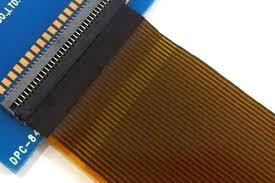
How to Repair a Damaged PCB Stiffener
Another common application for stiffeners is to help prevent solder pad drops on a flex PCB. When external force is applied to the terminal portions of some connectors, they can cause the gold fingers to fall off the FPC. This can cause the entire board to fail. The stiffener can help prevent this by providing more support to the terminal portion of the connector.
If a stiffener is damaged, it can be replaced with a new one using an adhesive-backed material. Pad stencils make the process of placing many tiny SMT pads faster, easier, and more consistent. These stencils have cutouts that match specific pad sizes to guide alignment. Once the adhesive-backed material is positioned over a pad site, the pads are placed in those cutouts and heat cures the adhesive to form a permanent bond.
Some metal-based stiffeners can act as heat sinks, which can draw heat away from the PCB and cause it to overheat. To prevent this, it is important to choose a material that will have good thermal properties and not interfere with the temperature distribution of the board. Stainless steel is an excellent choice for this purpose. It is durable, inexpensive to produce, and can be formed into a variety of shapes to suit the design. It can even be laser cut for complex shapes. Regardless of the material, it is important to note that any gaps between the stiffener and bare coverlay should be filled with solder. Otherwise, there is a risk of moisture seepage and corrosion. This can reduce the life of the flex PCB and cause electrical failures. It is also critical to use a low-temperature solder.


