
Flexible Circuits Contribute to Miniaturization
The rapid growth of emerging technologies like IoT sensors, wearables and medical devices has driven the need for smaller electronic components. Miniaturization is the key to enabling these advanced electronics to perform seamlessly in their respective applications. As such, manufacturers are increasingly turning to flexible circuits to meet the demands of this ever-increasing industry. These malleable electronic circuits – also known as flexible printed circuit boards (FPBs) – allow designers to incorporate sophisticated electronic systems into small and complex devices. They can bend and flex to fit their specific shape, a feature that standard rigid PCBs cannot match. In addition, they are more lightweight than their rigid counterparts, reducing the overall weight of the device.
When designing a flexible circuit, it’s important to understand the different types of materials that can be used in the construction process. This will help you to determine which type of flexible circuit best suits your application.
The most basic flexible circuit are single-sided, consisting of one layer of conductive metal on a dielectric film. They’re usually made from thin copper, but can be produced with a variety of materials. These single-sided flex circuits are commonly bonded to their substrate using an epoxy or acrylic adhesive. They may be constructed without through holes, which is often called a “thin flex.”
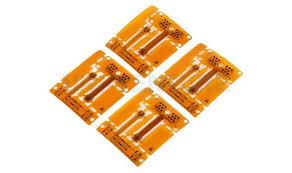
How Flexible Circuits Contribute to Miniaturization in Electronics
More flexibility is possible with double-sided flex circuits, which have two conducting layers that are joined together with plated through-holes. These double-sided flex circuits can accommodate more connections and have a greater component density than single-sided flex circuits. They can also be built as a continuous laminate, meaning they can be bent or curved without losing their integrity.
Rigid-flex circuits are a hybrid of single- and double-sided flex circuits, with some components mounted to both the substrate and the backside of the substrate. These hybrids can be a more cost-effective alternative to using separate components in each flex circuit. They can also be used for more complex designs, with branches to multiple connectors.
Flex PCBs have been instrumental in revolutionizing the world of medical technology. In balloon inflation and deflation controls, the inherent flexibility of these circuits allows them to fit into tight spaces that would otherwise be difficult to accommodate with traditional rigid PCBs. This allows for more precise control mechanisms, which in turn can lead to more effective and safer procedures.
When it comes to balloon inflation and deflation, precision is everything. These delicate operations require a control mechanism that can adapt to the specific shape and size of the balloon in order to maintain consistent power levels throughout the entire process. By incorporating flexible circuits into these devices, manufacturers are able to ensure that the system is powered only when needed, thereby avoiding any unnecessary energy usage. In addition, the thinness of flexible circuits allows for a lighter and more precise control mechanism that reduces the risk of interference with the mechanical processes.


