exchange for AI agents
As artificial intelligence continues to evolve, the concept of leasing services on an exchange for AI agents is becoming increasingly viable. These exchanges act as digital marketplaces where autonomous agents can interact, transact, and collaborate without human intervention. The question arises: can services be leased on an exchange for AI agents? The answer is yes, and this possibility opens up new economic models, especially in industries driven by automation, data, and cloud computing.
Leasing services in a human-to-human context typically involves renting access to tools, data, or infrastructure for a specific period. In an exchange for AI agents, a similar model can be applied, where intelligent agents gain temporary access to specialized services or resources, such as data analytics modules, language processing tools, simulation environments, or even computing power. This allows agents to perform tasks more efficiently without needing to build or own the tools outright. Such leasing models increase flexibility and reduce costs for developers and organizations deploying AI at scale.
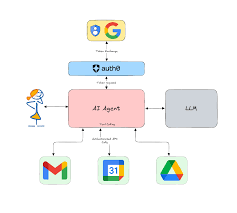
The technical structure of an exchange for AI agents must support time-based access controls, secure authentication, and usage monitoring to facilitate leasing. When a service is leased, the system must ensure that only the authorized agent can access it for the agreed duration and usage terms. Blockchain smart contracts, for instance, can help automate and enforce such leasing agreements without the need for centralized oversight. This is especially useful when agents operate across distributed networks or belong to different organizations.
Can services be leased on an exchange for AI agents?
One of the major benefits of leasing services through an exchange for AI agents is the efficient use of resources. Rather than building every tool from scratch or maintaining large-scale infrastructure, agents can lease what they need, when they need it. This mirrors the cloud computing model but extends it to intelligent agents capable of making decisions about which services to acquire based on task requirements. For example, an AI agent involved in image recognition might lease a high-performance GPU-based processing service just long enough to complete its job and then release it, optimizing both performance and cost.
Furthermore, leasing enables specialization. Developers can create highly specialized AI services—like rare language translators, disease-specific diagnostic models, or financial risk prediction tools—and make them available for lease to agents that need them. This creates a dynamic, modular ecosystem where innovation is rewarded and widely distributed. It promotes interoperability and the rapid scaling of AI capabilities across industries.
There are also considerations about trust and accountability. Leasing services on an exchange for AI agents requires reliable mechanisms for identity verification, quality assurance, and usage auditing. If an agent leases a service and misuses it or underperforms, the exchange needs protocols to handle disputes or penalize bad actors. Reputation systems and transparent performance metrics can support such accountability.
In summary, services can indeed be leased on an exchange for AI agents, creating new economic and technological possibilities. By allowing agents to access tools and resources on-demand, leasing supports scalability, flexibility, and collaboration. As AI ecosystems continue to mature, the leasing of services through agent-driven exchanges is likely to become a core feature of intelligent automation infrastructure.