
manage signal integrity in Pcb productions
Signal integrity is a crucial aspect of PCB production, especially as electronic devices become faster and more complex. In simple terms, signal integrity refers to the quality of electrical signals as they travel through the traces and components on a PCB (Printed Circuit Board). Ensuring proper signal integrity is vital for the reliable performance of the PCB, as issues like signal distortion, noise, and timing errors can lead to functional failures. Managing signal integrity in PCB production requires careful attention to design, materials, and manufacturing techniques.
One of the key strategies for managing signal integrity in PCB production is trace design. The layout of signal traces has a significant impact on signal quality. Traces that are too long, too narrow, or irregularly routed can cause signal degradation due to resistance, capacitance, and inductance. To maintain signal integrity, designers aim to keep traces as short and direct as possible. Additionally, the width of the trace is carefully chosen based on the current it carries and the desired impedance.
Another essential factor in managing signal integrity is impedance control. Impedance is the opposition to the flow of an electrical signal, and mismatched impedance can result in signal reflections, leading to data errors. In high-frequency or high-speed pcb production, maintaining controlled impedance is critical. Designers calculate and control the impedance of signal traces by adjusting their width, thickness, and distance from the ground plane or neighboring traces. Microstrip and stripline configurations are commonly used to achieve accurate impedance matching, ensuring smooth signal transmission.
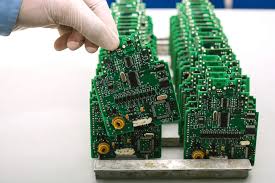
How do you manage signal integrity in Pcb productions?
The use of ground planes and power planes is another effective method for improving signal integrity in PCB production. A ground plane serves as a low-impedance return path for signals, minimizing noise and preventing ground loops. By placing signal traces close to a solid ground plane, designers can reduce electromagnetic interference (EMI) and crosstalk. Additionally, using multiple ground planes in multilayer PCBs helps isolate high-frequency signals and improve overall signal quality.
Minimizing crosstalk between adjacent traces is also crucial in managing signal integrity. Crosstalk occurs when signals from one trace interfere with neighboring traces, causing noise and distortions. To reduce crosstalk in PCB production, designers maintain adequate spacing between signal traces, use differential pair routing for high-speed signals, and avoid parallel routing over long distances. Shielding critical traces with ground planes or routing them on different layers can further minimize interference.
Signal termination is another technique used to ensure signal integrity in PCB production. Termination involves placing resistors or other components at the ends of signal traces to reduce signal reflections caused by impedance mismatches. Proper termination is particularly important for high-speed digital signals, as it prevents ringing, overshoot, and other signal distortions.
The choice of materials used in PCB production also influences signal integrity. Substrates with low dielectric constants (e.g., Rogers or PTFE-based materials) are preferred for high-frequency applications, as they reduce signal loss and maintain signal speed. High-quality copper and low-loss laminates are also used to minimize resistance and ensure consistent signal performance.
In conclusion, managing signal integrity in PCB productions requires a combination of careful design practices, controlled impedance, ground plane usage, crosstalk reduction, proper termination, and material selection. By addressing these factors, PCB manufacturers can ensure that signals remain clear, accurate, and free from interference, leading to reliable and high-performance electronic devices. As technology evolves and devices demand faster data transmission, managing signal integrity will remain a critical focus in PCB production.


